The modern project landscape is characterized by an overwhelming influx of data and competing priorities. For PMO leaders and project directors, the ability to discern which tasks require immediate attention is the difference between organizational growth and systemic failure. Traditional methods of sorting work are often too slow to keep pace with the rapid shifts in today’s digital economy.
The foundational principles of the industry are rooted in project management basics that emphasize order and structure. However, as organizations scale, manual intervention becomes a bottleneck that drains executive energy. Leaders must now look toward intelligent systems to maintain a competitive edge and ensure every hour spent by their team contributes to the bottom line.
Strategic prioritization is no longer just about checking boxes or managing a to-do list. It is a high-stakes exercise in resource optimization and risk management. By adopting an AI-first approach, project directors can move away from reactive firefighting and toward a proactive state of operational excellence.
The Crisis of Decision Fatigue in Senior Management
Senior IT managers and project directors face a unique challenge known as decision fatigue. Every minor choice regarding task order consumes mental bandwidth that should be reserved for high-level strategy. Over time, this exhaustion leads to suboptimal choices and missed opportunities for innovation.
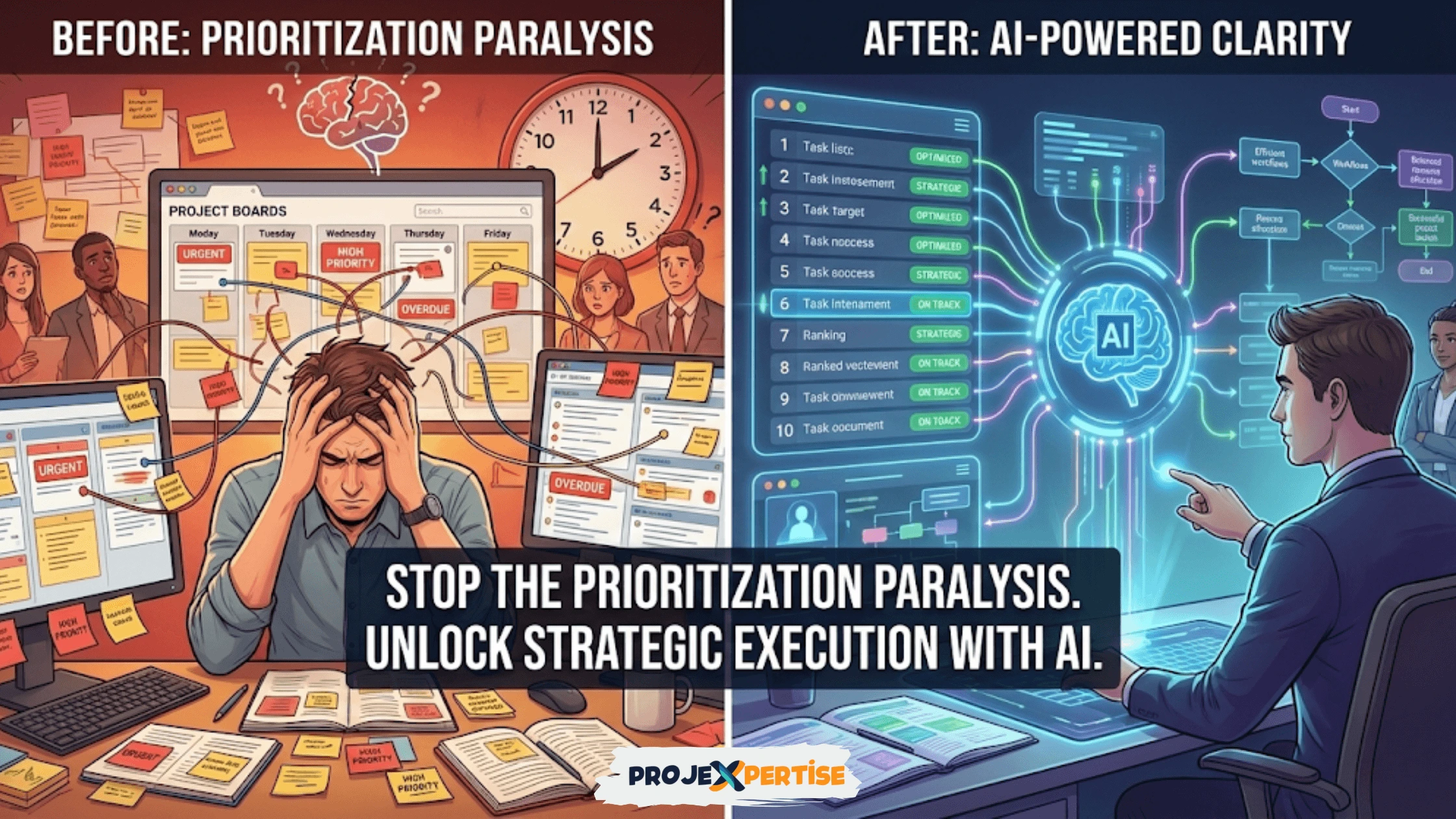
When teams rely on manual spreadsheets or basic lists, they often fall victim to the “urgency trap.” This occurs when tasks that seem immediate overshadow the work that is actually important for long-term goals. Understanding project time management is essential for avoiding this pitfall, yet even the most disciplined managers need a more robust framework.
The transition to automated sorting allows leaders to regain control over their schedules. By utilizing the complete AI system for task prioritization, you can delegate the analytical heavy lifting to a specialized logic engine. This shift empowers you to focus on leading people rather than managing rows of data.
Buy onTransitioning from Manual to AI-Enhanced Workflows
The shift toward automation is not merely a trend but a fundamental change in how business is conducted. Project management offices that continue to rely on manual sorting will inevitably fall behind more agile competitors. The core benefit of AI is its ability to process thousands of variables in seconds to provide a clear path forward.
A significant part of this evolution involves Workflow Automation which integrates seamlessly into your current operations. By using an AI blueprint, you create a standardized logic that can be applied across different departments. This consistency ensures that everyone is moving in the same direction without constant supervision.
Standardizing these processes is a hallmark of professional maturity. When you implement a system that uses multi-weighted scoring, you remove the subjectivity that often clouds human judgment. This creates a fair and transparent environment where tasks are prioritized based on merit and impact rather than internal politics.
Aligning Project Tasks with PMBOK Standards
Professional project management is governed by rigorous standards that ensure quality and consistency. The latest updates in the PMBOK 7th edition highlight the importance of value delivery and stakeholder satisfaction. An AI-driven prioritization system is the most effective way to uphold these principles at scale.
Traditional scheduling often fails to account for the nuances of modern project environments. By integrating project scheduling techniques with AI logic, you can create dynamic plans that adapt to change. This agility is necessary for maintaining alignment with the overall business objectives.
Furthermore, AI ensures that project scope management remains a priority throughout the project lifecycle. It prevents scope creep by highlighting when new requests threaten the primary deliverables. This level of oversight is critical for project directors who are responsible for meeting board-level expectations.
The Mechanics of Intelligent Task Scoring
At the heart of an advanced AI system is a sophisticated scoring model. Unlike basic tools, an AI prompt can evaluate a task based on its strategic alignment, resource cost, and potential risk simultaneously. This multidimensional analysis provides a level of depth that human managers cannot achieve alone.
The system works by applying a master prompt to your existing project data. It looks at project resource management needs and identifies potential conflicts before they occur. This predictive capability allows you to adjust your plan before a bottleneck disrupts your entire timeline.
By using these digital assets, you are essentially installing a strategic brain into your PMO. The AI does not just tell you what to do but explains why it has made those specific recommendations. This transparency is vital for building trust within your team and among high-level stakeholders.
Enhancing Stakeholder Trust through Data-Driven Clarity
Stakeholders expect clear communication and evidence-backed decisions from project leaders. When a director can demonstrate exactly why a project roadmap looks a certain way, it builds immense authority. This is where stakeholder prioritization becomes a competitive advantage.
Using AI to sort tasks allows you to present a roadmap that is logically sound and mathematically verified. This reduces friction during board meetings and status updates. You can clearly show how each prioritized task contributes to the project delivery milestones that matter most to the organization.
Moreover, effective stakeholder engagement relies on your ability to deliver results consistently. When your team is always working on the most valuable tasks, your success rate increases. This reliability is the foundation of a strong professional reputation in senior management.
Mitigating Risk through Automated Sorting
Every project contains inherent threats that can derail progress if left unaddressed. A reactive approach to risk often means that by the time a problem is identified, it is already too late. Integrating project risk management into your prioritization logic is a game changer for PMO leaders.
The AI system evaluates tasks not just for their output but for their risk profile. It ensures that high-risk dependencies are prioritized early so that they do not become blockers later in the schedule. This proactive sorting is essential for maintaining a high-performing project environment.
By combining risk analysis with project communication strategies, you can keep your team informed of potential issues. The AI acts as an early warning system that keeps everyone focused on the critical path. This reduces the stress of project management and creates a more stable work environment.
Integration with Existing Task Management Software
One of the greatest fears for executives is the complexity of new software implementations. However, the ProjeXpertise blueprints are designed to complement your current task management software rather than replace it. The AI acts as an analytical layer that sits on top of your existing tools.
Whether your organization uses specialized enterprise tools or simpler platforms, the AI logic remains consistent. It pulls data from your current lists and processes it through the advanced prompt system. This ensures that you can start seeing results immediately without a lengthy training period for your staff.
This seamless integration is a key component of AI project manager productivity strategies. It allows you to maintain your established workflows while gaining the benefits of high-level data analysis. You get the best of both worlds: the familiarity of your existing tools and the power of modern AI.
Mastering the Project Management Phases
Every successful initiative follows a structured path from inception to completion. Navigating the project management phases requires different levels of prioritization at each stage. An AI system provides the flexibility to adjust its logic based on whether you are in the planning, execution, or closing phase.
In the early stages, the focus is on strategic alignment and resource planning. As the project moves into execution, the AI shifts its focus toward progress tracking and immediate bottleneck resolution. This dynamic adjustment ensures that your prioritization is always relevant to the current state of the project.
This level of sophistication is what separates elite project directors from average managers. You are no longer following a static plan but managing a living system. The ability to pivot based on real-time data is the hallmark of a truly success-driven leadership style.
Building a Culture of Operational Excellence
The adoption of AI tools is more than just a technical upgrade. It is a commitment to a culture of excellence. When a PMO leader chooses to automate the most tedious parts of the job, it sends a clear message to the team. It shows that the organization values efficiency, data-backed decisions, and professional growth.
Freeing up your team from manual sorting allows them to engage in more creative and strategic work. They can spend more time on problem-solving and less time on administrative overhead. This leads to higher job satisfaction and lower turnover rates among your top talent.
The path to this transformation is clear and achievable. By implementing a proven system, you can reduce your weekly workload by over 10 hours. This reclaimed time can be reinvested into mentoring your team or pursuing new business opportunities that drive organizational value.
Secure Your Executive Edge Today
The window for gaining a competitive advantage through AI adoption is currently open, but it will not stay that way forever. As more organizations realize the power of automated prioritization, those who act now will be the ones who lead the industry. You have the chance to transform your PMO into a high-efficiency engine of success.
Don’t let manual processes continue to drain your energy and slow down your projects. Take the first step toward a smarter, faster, and more professional way of working. The tools and frameworks you need to succeed are available and ready for immediate implementation.
Maximize your team’s impact with the Advanced Task Prioritization AI System
Frequently Asked Questions
How does AI task prioritization differ from the Eisenhower Matrix?
Traditional methods like the Eisenhower Matrix rely on human judgment to categorize tasks into four basic quadrants. AI prioritization goes much deeper by analyzing hundreds of data points, including resource availability, complex dependencies, and real-time risk factors. This removes human bias and provides a much more accurate representation of what actually needs your attention.
Can I integrate this AI system with my existing task management software?
Yes, the ProjeXpertise blueprints are designed to be platform-agnostic. You can take the logic and prompts from the system and apply them to data exported from tools like Jira, Asana, ClickUp, or Microsoft Project. The system acts as an analytical overlay that enhances the data you are already collecting in your current software environment.
Is this system compliant with PMBOK 7th edition standards?
Absolutely. The logic behind the Advanced Task Prioritization AI System is built upon the principles of value delivery and performance domains found in the PMBOK 7th edition. It ensures that your prioritization aligns with professional global standards while leveraging modern technology to automate the manual aspects of those frameworks for better efficiency.
How long does it take to implement an AI prioritization workflow?
Most senior managers can begin seeing results within the first week of implementation. The system includes a clear roadmap that guides you through the setup process. While a full organizational transformation may take longer, the immediate benefits of reclaimed time and clearer task lists are visible almost as soon as you run your first prompt.
What data points does the AI use to determine task urgency?
The system evaluates multiple variables including strategic business impact, deadline proximity, resource cost, and technical dependencies. It also factors in risk levels and stakeholder importance to create a weighted score for every item. This multi-layered analysis ensures that the most critical tasks rise to the top of your list based on objective data.
Do I need advanced technical skills to use these AI prompts?
No advanced coding or technical skills are required to use this system. The product is designed for project managers and executives who want results without the need for technical complexity. You simply need to follow the provided implementation roadmap and use the master prompts with your preferred AI tool to begin optimizing your workflows.